Why Safe Sleep Matters
Creating a safe sleep environment is one of the most important things you can do to protect your baby. Following safe sleep guidelines can significantly reduce the risk of Sudden Infant Death Syndrome (SIDS) and other sleep-related injuries.
GOOD TO KNOW
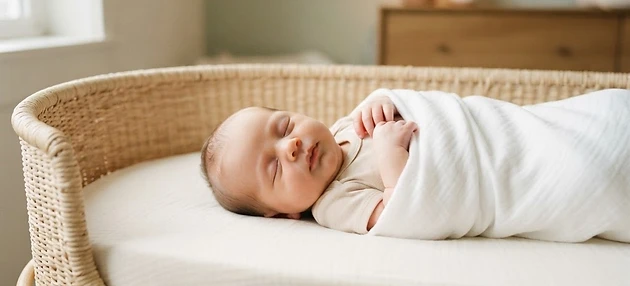
The safest sleep position for your baby is on their back — every sleep, every nap, every time.
The ABCs of Safe Sleep
Remember the ABCs:
- Alone — your baby should sleep alone in their crib or bassinet, without blankets, pillows, bumpers, or stuffed animals
- Back — always place your baby on their back to sleep
- Crib — use a firm, flat sleep surface with a fitted sheet
What to Avoid
- Soft bedding, loose blankets, and pillows
- Crib bumpers and stuffed animals
- Sleeping on couches, armchairs, or soft surfaces
- Sharing a bed with your baby (room-sharing is recommended, bed-sharing is not)
- Overheating — dress your baby in light sleep clothing
SAFETY
If your baby rolls over on their own during sleep, you do not need to reposition them. But always start them on their back.
Room-Sharing
The American Academy of Pediatrics recommends room-sharing (keeping your baby's crib in your room) for at least the first 6 months, ideally the first year. This can reduce the risk of SIDS by up to 50%.
ASK YOUR PROVIDER
Ask your pediatrician about safe sleep practices specific to your baby, especially if your baby was born premature or has special health needs.
Key Takeaways
- Always place your baby on their back to sleep
- Use a firm, flat sleep surface with a fitted sheet
- Keep soft objects and loose bedding out of the crib
- Room-share but do not bed-share
- Avoid overheating your baby